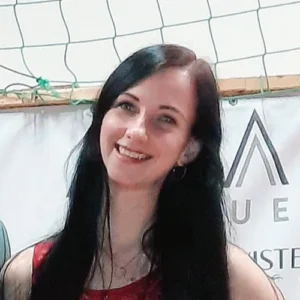
Bio Excerpt: Deb Williams pioneered motorsports journalism for over four decades, becoming one of the first women to regularly cover NASCAR when she joined United Press International in the late 1970s. Her first NASCAR media credential in 1980 literally stated “No Women Allowed in Pits,” but Williams powered... (full bio below ↓↓)
Deb Williams
WoMo racer
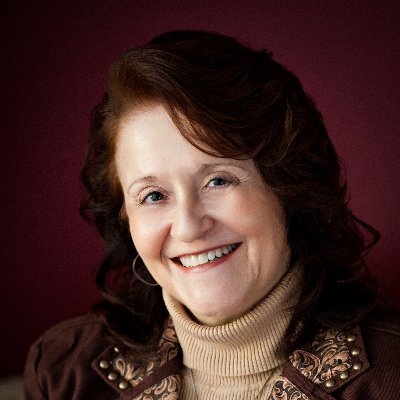
click to enlarge
Deb's Socials:
Deb's Details:
Deb's Sponsors:
YOUR SPONSORS LOGOS HERE
YOUR SPONSORS LOGOS HERE
YOUR SPONSORS LOGOS HERE

Deb's full bio:
Deb Williams spent over four decades breaking down doors in motorsports journalism, becoming one of the first women to regularly cover NASCAR and earning a Hall of Fame career built on grit, great storytelling, and refusing to take no for an answer.
EARLY YEARS
Born and raised in Canton, North Carolina, Williams came into this world screaming—and apparently wouldn’t stop until her parents figured out the secret. The only place baby Deb would settle down and sleep? Under the loudspeaker at the local racetrack. It was either fate or parental desperation, but either way, racing was in her blood from day one.
Growing up in Canton during the 1960s meant being immersed in racing culture whether you wanted to be or not. Her first real memories of the track date back to age four, when the roar of engines and the smell of burnt rubber became as familiar as Sunday dinner. Watching races around Asheville before she was old enough to drive herself, Williams absorbed the sport in its rawest, most authentic form—long before corporate sponsors sanitized everything and media credentials came with bathroom access.
She enrolled at East Tennessee State University, where she earned a degree in journalism with a minor in criminal justice in 1976. While at ETSU, she honed her sports writing chops working for the East Tennessean and the Johnson City Press-Chronicle, learning early that being a woman in a man’s press box meant working twice as hard to be taken half as seriously.
OTHER INTERESTS
Beyond the racetrack, Williams turned her journalist’s eye toward education and authorship. She became an adjunct professor at Appalachian State University in Boone, North Carolina, passing along decades of hard-won knowledge to the next generation of storytellers. She’s also written or contributed to several auto racing books, including “Charlotte Motor Speedway History: From Granite to Gold,” proving she could tackle long-form narrative with the same sharp precision she brought to deadline copy. With 14 books to her name on Goodreads, Williams clearly never met a blank page she couldn’t fill.
EARLY SUCCESS
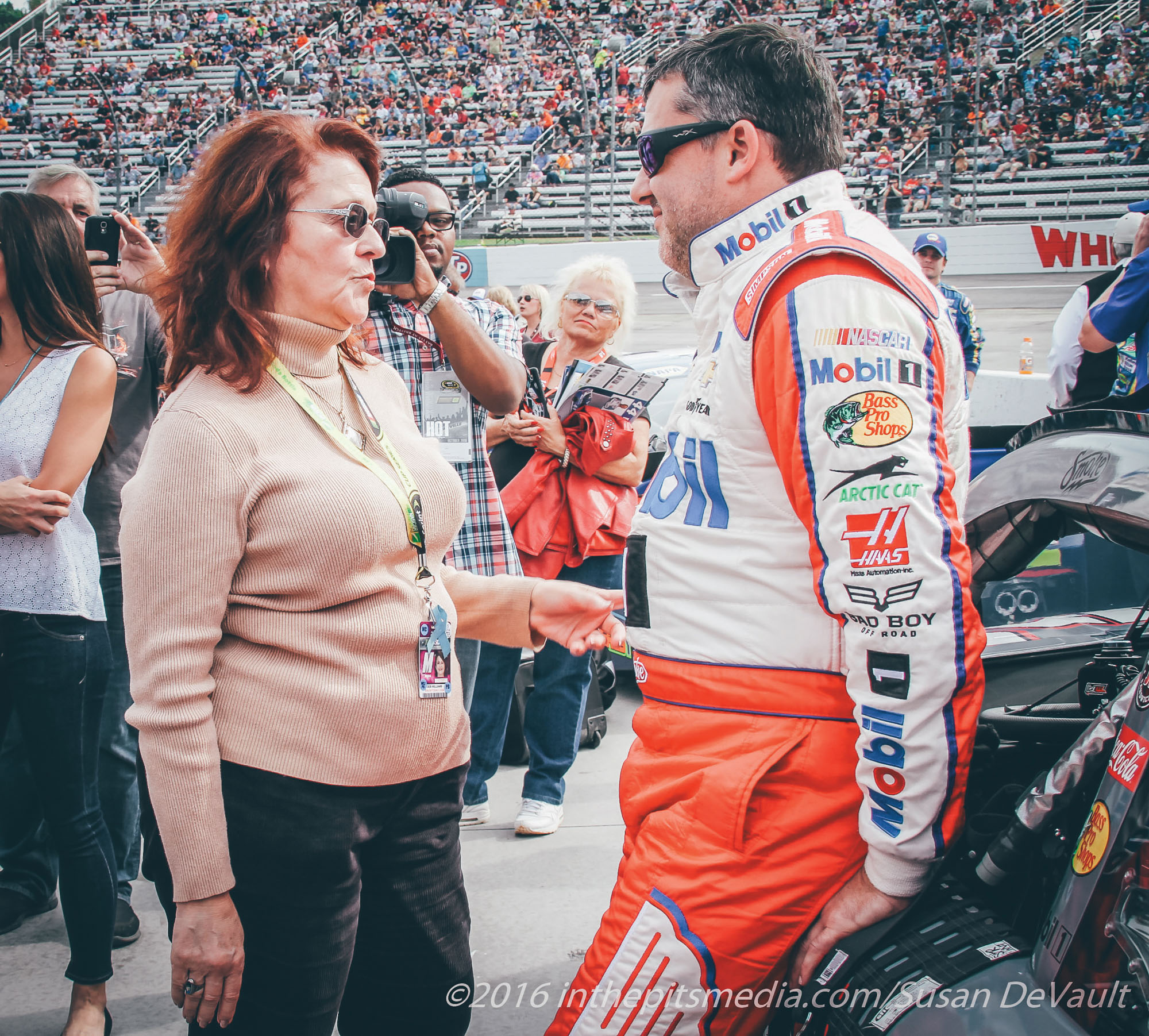
Williams kicked off her professional journalism career in the late 1970s at United Press International, becoming one of the first women to regularly cover NASCAR. This wasn’t a participation trophy era—when she picked up her first media credential on Labor Day in 1980, women were literally barred from pit access at many tracks. Her credential from Darlington Raceway that year had “No Women Allowed in Pits” printed right on it, a charming reminder that she was crashing a party nobody wanted her at.
The press boxes weren’t much better. Most tracks had only one bathroom—for men, obviously—because the idea of female journalists was treated like a hypothetical that would never actually happen. North Wilkesboro was the first track to install separate men’s and women’s bathrooms in the press box, a detail that sounds quaint now but represented genuine progress for women trying to do their jobs without a side of humiliation.
But Williams wasn’t deterred by logistics or hostility. She covered weekly races in Asheville, North Carolina, throughout the 1970s, building sources and sharpening her craft in the minor leagues of racing. By the time she landed at UPI, she had the chops to hang with anyone—and the stubbornness to outlast the skeptics.
Her early years included some genuinely pinch-me moments. She interviewed actor Burt Reynolds during the filming of “Stroker Ace,” a racing comedy that was, let’s be honest, more comedy than racing. Reynolds gave her about 20 minutes, and she made them count. She also covered Richard Petty’s monumental 200th win—complete with President Ronald Reagan showing up and an iconic victory picnic under a tent at Daytona. It was the kind of historic moment that reminded her why she’d fought so hard to be in the room.
NOTABLE ACHIEVEMENTS
- 1980: Received her first NASCAR media credential, despite women being barred from pit access at most tracks.
- 1990: Became the first woman to win the American Motorsports Media Award of Excellence (formerly the Henry T. McLemore Award).
- Late 1980s–2006: Spent 18 years with NASCAR Winston Cup Scene, serving as editor for 10 of those years.
- 2013: Received an Award of Honor from the ETSU National Alumni Association.
- Inducted into the National Motorsports Press Association Hall of Fame, honored by her friend Kyle Petty.
- Two-time recipient of the National Motorsports Press Association Writer of the Year award, becoming the first woman to win the honor.
- Received the Russ Catlin Award for Motorsports Journalism.
- 2026: Named recipient of the Squier-Hall Award for NASCAR Media Excellence, becoming the 14th winner of the prestigious honor.
After leaving UPI, she spent a year as a freelance contributor before joining NASCAR Winston Cup Scene, where she became a cornerstone of the publication. Her tenure there solidified her reputation as one of the sharpest, most reliable voices in the sport. She also served as managing editor of GT Motorsports magazine and contributed to The Charlotte Observer, USA Today, The Gaston Gazette, and a laundry list of other outlets that recognized talent when they saw it.
Williams is currently a senior writer with RacinToday.com, a feature writer for National Speed Sport News, and a correspondent for Autoweek, proving that even after four decades, she’s not slowing down.
INSPIRATIONS
Williams grew up watching the legends of 1960s racing tear up short tracks around Asheville, soaking in the raw, unpolished energy of a sport that hadn’t yet been packaged for mass consumption. Those early years gave her an “old school” sensibility that colleagues and readers still recognize today—she cut her teeth in an era when racing was gritty, access was earned, and every story had to fight for space on the wire.
Her journalism idols were the writers who didn’t waste words and didn’t pull punches, the ones who understood that racing wasn’t just about who crossed the finish line first—it was about the people, the drama, and the culture surrounding it. That philosophy shaped everything she wrote, from daily race coverage to deep-dive features on the sport’s most iconic figures.
REPUTATION
Williams earned a reputation as an “old school” writer—a label she wears with pride. She’s known for sharp, no-nonsense storytelling that gets to the heart of the matter without fluff or filler. Someone once tried to hire her back in the 1980s specifically because of that no-BS approach, a testament to how her style stood out even in a crowded press box.
She’s interviewed everyone from Mario Andretti to Dale Earnhardt, covered everything from weekly short track battles to Cup Series championships, and witnessed the sport transform from a Southern pastime into a national spectacle. Along the way, she’s earned the respect of drivers, team owners, and fellow journalists—not because she asked for it, but because she proved she belonged there.
Her peers recognize her as a trailblazer who didn’t just open doors for women in motorsports media—she kicked them down and held them open for everyone who came after. The National Motorsports Press Association Hall of Fame inductee and two-time Writer of the Year winner didn’t get there by playing nice; she got there by being damn good at her job.
FUTURE GOALS/PLANS
Williams continues teaching at Appalachian State University, shaping the next generation of motorsports journalists and making sure they understand the difference between reporting and regurgitating press releases. She remains active in the media landscape, contributing to Autoweek, RacinToday.com, and National Speed Sport News, proving that retirement is a concept for people with less to say.
With the 2026 Squier-Hall Award under her belt, she’s cemented her legacy as one of the most important voices in NASCAR media history. But knowing Williams, she’s not done telling stories—she’s just getting warmed up.
REFERENCES
[1] Deb Williams | 2026 Squier-Hall Award Winner – NASCAR Hall of Fame
[2] Autoweek’s Deb Williams Recognized by NASCAR – Autoweek
[3] Deb Williams Named 2026 Squier-Hall Award Recipient – NASCAR Hall of Fame
[4] Deb Williams – RACER
[5] Hall of Fame Career – East Tennessee State University
[6] Deb Williams: Hollywood with Burt Reynolds & History with Earnhardt – wavePod
[7] Hall of Fame Journalist Offers Powerful Insight on NASCAR’s Progress for Women – Pro Football Network
[8] Deb Williams: A Female Trailblazer For NASCAR Media – YouTube
[9] Legendary NASCAR journalist celebrating four decades of proving people wrong – WLOS