Bio Excerpt: Janet Guthrie didn’t just break barriers in American motorsports—she obliterated them with the precision of a physicist and the fearlessness of a fighter pilot. Born in 1938, this University of Michigan physics graduate traded her NASA astronaut dreams for racing glory when the space program rejected... (full bio below ↓↓)
Janet Guthrie
IndyCar racer
click to enlarge
Janet's Socials:
Racing is a matter of spirit not strength.
Janet's Details:
Janet's Sponsors:
YOUR SPONSORS LOGOS HERE
YOUR SPONSORS LOGOS HERE
YOUR SPONSORS LOGOS HERE



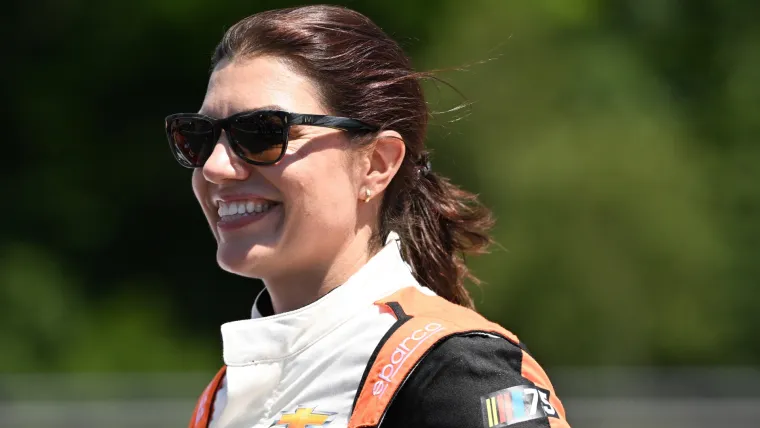
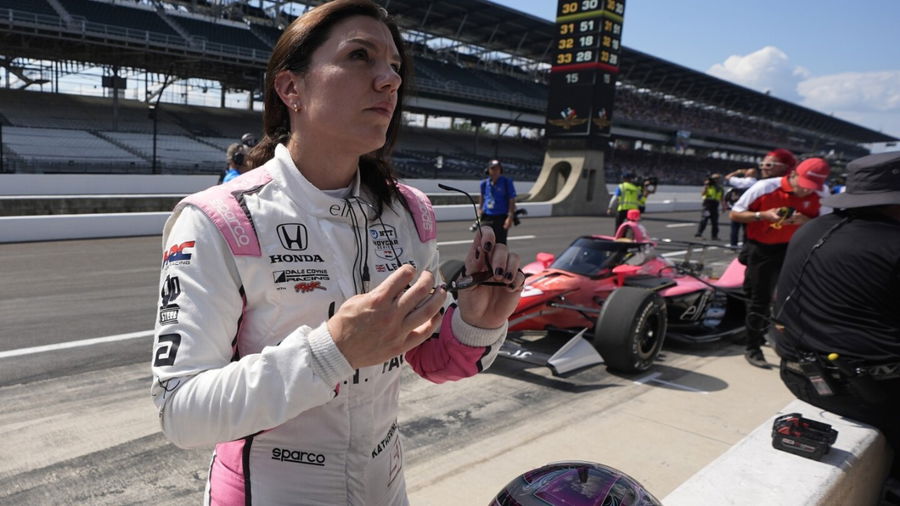
Janet's full bio:
Janet Guthrie didn’t just crack open the door for women in American motorsports—she kicked it clean off the hinges, then drove through at 200 mph while everyone else stood around wondering what just happened.
EARLY YEARS
Born March 7, 1938, in Iowa City, Iowa, Janet Guthrie came into the world with a brain wired for physics and a soul hungry for speed. Her first great passion wasn’t racing—it was flying. She enrolled at the University of Michigan to study physics, but halfway through her sophomore year, she hit pause on the textbooks to earn her commercial pilot’s license and flight-instructor rating. Because why not learn to pilot aircraft before you’re old enough to rent a car?
She returned to finish her physics degree, and by 1964, her eye was on the stars—literally. Guthrie applied to NASA’s Scientist-Astronaut Program and made it through the first round of eliminations as one of only four women. But NASA rejected her, and the space program’s loss became motorsports’ gain. If she couldn’t break through the atmosphere, she’d break through another ceiling entirely.
OTHER INTERESTS
Guthrie was a woman of serious intellectual firepower. Her physics degree wasn’t just for show—it gave her an engineer’s understanding of machinery, forces, and performance, all of which translated beautifully to the track. She was also a flight instructor, teaching others to navigate the skies with the same precision she’d later apply to navigating oval tracks at triple-digit speeds.
In 2005, she published her autobiography, Janet Guthrie: A Life at Full Throttle, a sharp, candid account of her journey through a sport that didn’t want her there. She became a charter member of the Women’s Sports Foundation, advocating for female athletes across all disciplines. And in 1978, she did something most people would consider inadvisable: she raced the Indianapolis 500 with a broken wrist, finishing ninth. Because apparently, pain is just another data point.
EARLY SUCCESS
Guthrie began racing in 1963 at age 25, hitting the SCCA circuit in a Jaguar XK140. She built her first auto engine in 1964, getting grease under her nails and proving she understood cars from the inside out. “Sportscar racing had the direct person-to-person competition and that really put the cherry on top,” she later said. It was the kind of racing where skill mattered more than machinery, and she had skill in spades.
Between 1966 and 1971, she raced as part of an all-women team, and by 1972, she was racing full-time. She notched two class wins at the 12 Hours of Sebring—one in 1967, another in 1970—proving she had the stamina and strategy for endurance racing. But Guthrie wanted more. She wanted the big leagues, the kind of racing that made headlines and history. So she set her sights on NASCAR and IndyCar, two series that had never seen a woman compete at their highest levels.
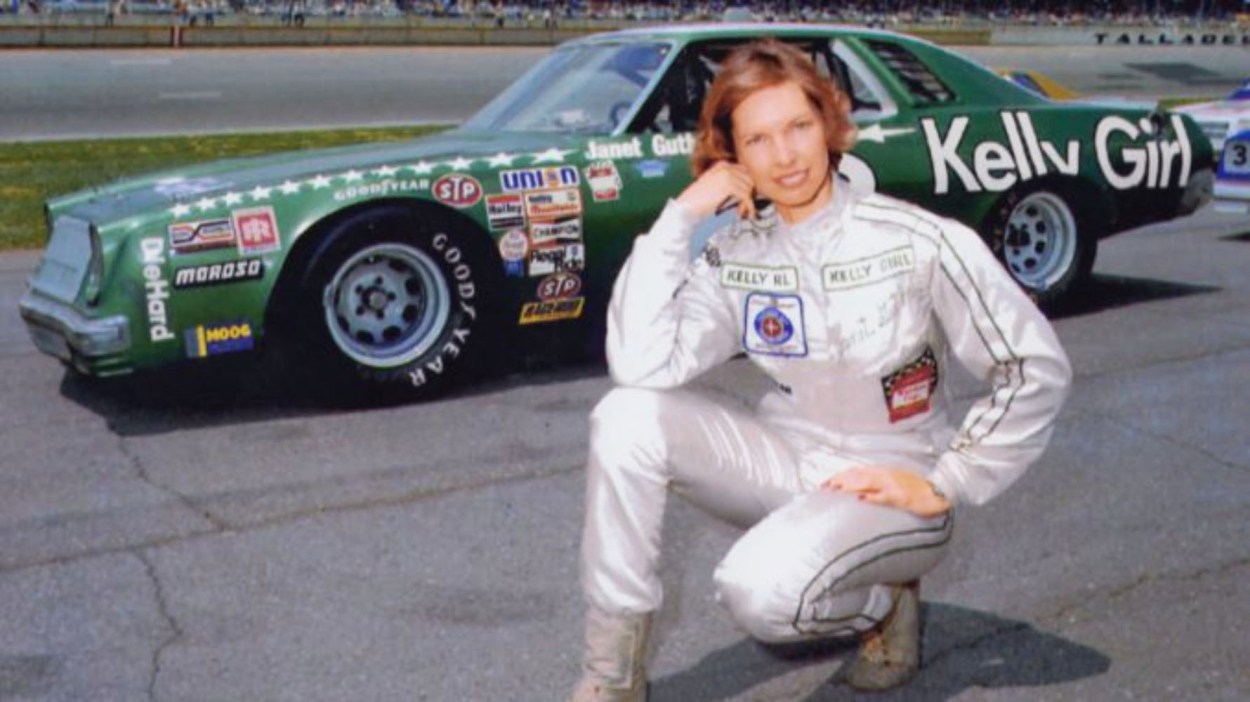
In 1976, she made her NASCAR Winston Cup debut at the World 600, finishing 15th and becoming the first woman to compete in a superspeedway race. She started behind a young Dale Earnhardt that day—a footnote that would become legendary in its own right. She attempted to qualify for the 1976 Indianapolis 500 but failed, and the skepticism was loud and gendered. Critics attributed her struggles to her sex, not to the mechanical issues that plagued her car. A.J. Foyt, furious at the doubters, lent her his backup car for a shakedown test. Her top practice lap would have qualified. Point made.
NOTABLE ACHIEVEMENTS
- 1967: Class win at 12 Hours of Sebring.
- 1970: Class win at 12 Hours of Sebring.
- 1976: First woman to compete in a NASCAR Winston Cup superspeedway race (World 600, 15th place).
- 1977: First woman to qualify and race in the Indianapolis 500 (qualified 26th, finished 29th).
- 1977: First woman to qualify and race in the Daytona 500 (finished 12th, top rookie).
- 1977: First woman to lead a lap in the NASCAR Cup Series (Ontario Motor Speedway).
- 1978: Finished 9th at the Indianapolis 500 with a broken wrist (best finish by a woman for 27 years).
- 1979: Best IndyCar overall finish of 5th at Milwaukee.
- 1980: Inducted into the Women’s Sports Hall of Fame.
- 2006: Inducted into the International Motorsports Hall of Fame.
- 2019: Inducted into the Automotive Hall of Fame.
She competed in 11 IndyCar events total and tied with Danica Patrick for the highest NASCAR Cup finish by a woman (6th place). She remains the first woman with Top 10 starts and finishes in both IndyCar and NASCAR Cup. Her driving suit and helmet are in the Smithsonian, because that’s where trailblazers end up.
INSPIRATIONS
Guthrie didn’t talk much about heroes or idols. She wasn’t the type to get starry-eyed. A.J. Foyt helped her when it mattered, lending her equipment and credibility when the boys’ club tried to shut her out. But mostly, she was driven by her own relentless need to compete, to prove that skill transcends gender. “Racing is a matter of spirit not strength,” she wrote in her autobiography, and she lived that philosophy every time she strapped into a cockpit.
REPUTATION
Guthrie is regarded as one of the most important figures in American motorsports, not because she won the most races, but because she refused to be stopped. She raced in an era when the prevailing wisdom was that “tradition stated that women, peanuts, and the color green were not allowed.” She faced hostility, skepticism, and outright discrimination, and she responded by being faster, tougher, and more determined than anyone expected.
Her versatility was remarkable—she competed at the highest levels in NASCAR, IndyCar, and sportscar racing, proving she wasn’t a novelty act but an outstanding professional driver. She paved the way for Lyn St. James, Danica Patrick, and every woman who followed. The media celebrated her as a pioneer, and her peers—at least the ones who mattered—respected her abilities. She was a driver first, a woman second, and she never apologized for either.
For 1978, unable to secure corporate sponsorship, she formed, owned, and managed her own team for the Indianapolis 500. She finished ninth. With a broken wrist. That’s the kind of reputation that doesn’t fade.
FUTURE GOALS/PLANS
Janet Guthrie retired from racing, forced out not by lack of talent but by the same thing that sidelines so many drivers: money. She couldn’t secure the sponsorship funding needed to continue competing at the top levels. It was an unceremonious end to a career that deserved fanfare, but that’s racing—brutal, expensive, and indifferent to fairness.
Her legacy, however, is still very much in motion. Every time a woman straps into a race car, she’s driving on a road Guthrie built.
References:
Wikipedia: Janet Guthrie
Britannica: Janet Guthrie
International Motorsports Hall of Fame: Janet Guthrie
University of Michigan Alumni: Janet Guthrie
Smithsonian Magazine: Janet Guthrie
Women’s Sports Hall of Fame: Janet Guthrie
YouTube Interview: Janet Guthrie